How Much Money Do You Need to Live Comfortably in Dubai? The Honest 2026 Guide
How much money do you need to live comfortably in Dubai depends entirely on who you are — a single professional can manage well on AED 12,000–15,000 per month (roughly USD 3,270–4,085), while a family of four will need closer to AED 25,000–35,000 (approximately USD 6,810–9,535) to feel genuinely at ease. “Comfortable” in Dubai means different things to different people, but this guide defines it as: a decent apartment in a livable neighborhood, no financial anxiety about utilities or groceries, the ability to dine out a few times a week, and some room to save.
The figures above assume you are not on a shoestring and not living in a penthouse on Palm Jumeirah. They reflect the middle ground that most working expats actually occupy — and they are the numbers this guide will break down, category by category, without sugarcoating the parts that catch people off guard.
Table of Contents
How Much Money Do You Need to Live Comfortably in Dubai: The Core Budget

The biggest misconception people bring to Dubai is that the city is uniformly expensive. It is not. Dubai is selectively expensive — rent and international schools can be brutal, but groceries from Lulu Hypermarket, petrol, and public transport are genuinely affordable. Understanding where the money actually goes is the first step to building a realistic budget.
Based on current Numbeo cost of living data for Dubai and real neighborhood-level figures, here is what a comfortable lifestyle costs across each major category for a single person and a family of four.
Monthly Budget Table: Single Professional (Comfortable Lifestyle)
| Category | AED/Month | USD/Month |
|---|---|---|
| Rent — 1BR, mid-tier area (JLT, Sports City) | 5,500–7,000 | 1,498–1,906 |
| Utilities (DEWA + internet) | 700–900 | 191–245 |
| Groceries | 1,200–1,800 | 327–490 |
| Transport (Metro/Uber mix or car running costs) | 700–1,200 | 191–327 |
| Dining out (3–4x/week) | 1,000–1,500 | 272–409 |
| Health insurance (private, mid-tier) | 500–800 | 136–218 |
| Entertainment, personal care, miscellaneous | 800–1,200 | 218–327 |
| TOTAL | 10,400–14,400 | 2,833–3,922 |
Monthly Budget Table: Family of Four (Comfortable Lifestyle, No School Fees)
| Category | AED/Month | USD/Month |
|---|---|---|
| Rent — 2BR/3BR, mid-tier area | 9,000–14,000 | 2,451–3,813 |
| Utilities (DEWA + internet) | 1,200–1,800 | 327–490 |
| Groceries | 3,000–4,500 | 817–1,225 |
| Transport (car + fuel or two-person Uber) | 1,500–2,500 | 409–681 |
| Dining out (family, moderate frequency) | 2,000–3,000 | 545–817 |
| Health insurance (family plan) | 1,500–2,500 | 409–681 |
| Entertainment, personal care, miscellaneous | 2,000–3,000 | 545–817 |
| TOTAL (no school fees) | 20,200–31,300 | 5,503–8,524 |
Add AED 3,500–12,500/month per child for private school fees — this single line item is the most disruptive budget variable for families. Dubai has no free public schooling for expatriate children, so the school fee question is not optional.
Breaking Down the Biggest Expense: Rent in Dubai
Rent is where comfortable living in Dubai either comes together or falls apart. The city does not have one rental market — it has at least three, segmented by location and lifestyle tier.
Premium Locations (Downtown, Marina, Palm Jumeirah)
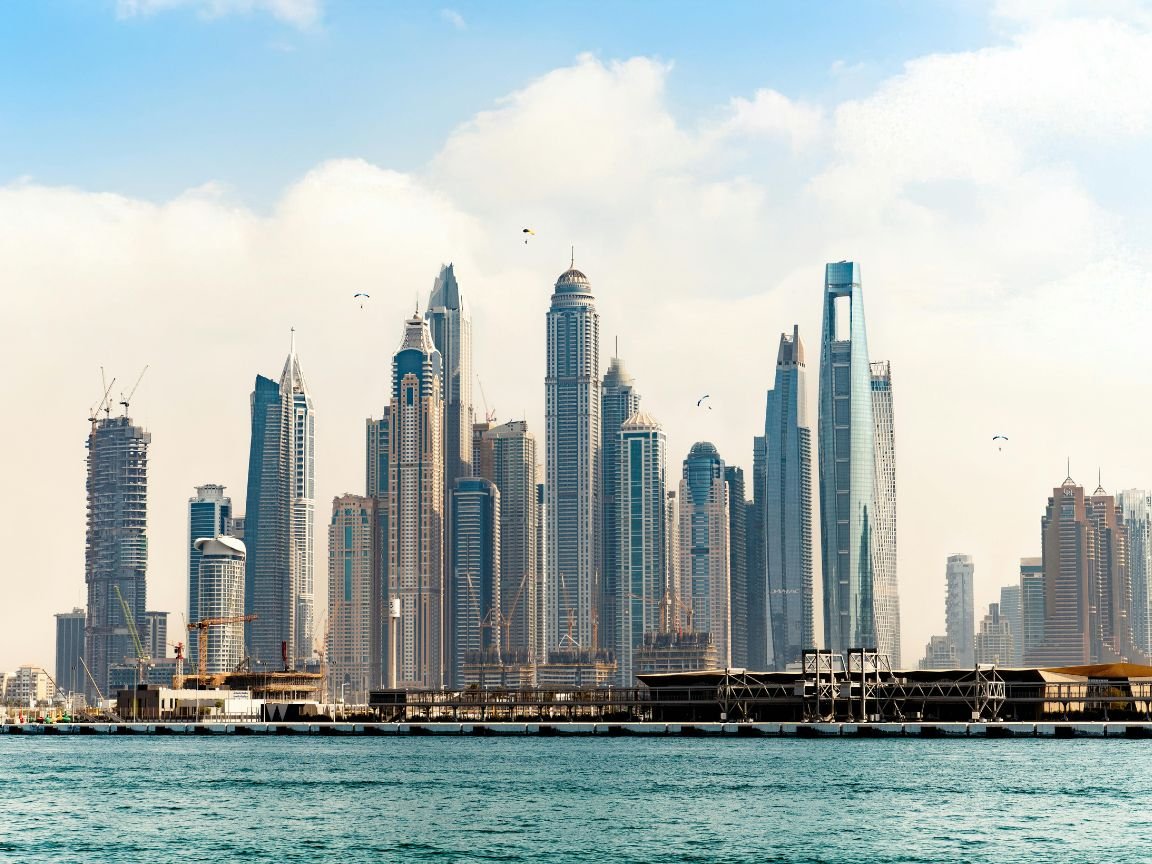
A one-bedroom apartment in Downtown Dubai or Dubai Marina runs AED 8,000–12,000 per month at the comfortable end. These areas offer walkability, waterfront access, and proximity to the city’s best restaurants. They also represent the most aggressive rent increases — the Marina and JBR saw year-on-year increases of nearly 28–29% in 2025. If you want to live here comfortably as a single person, budget for it explicitly rather than assuming it falls into the standard range.
Mid-Tier Locations (JLT, Dubai Hills, Al Barsha, Sports City)
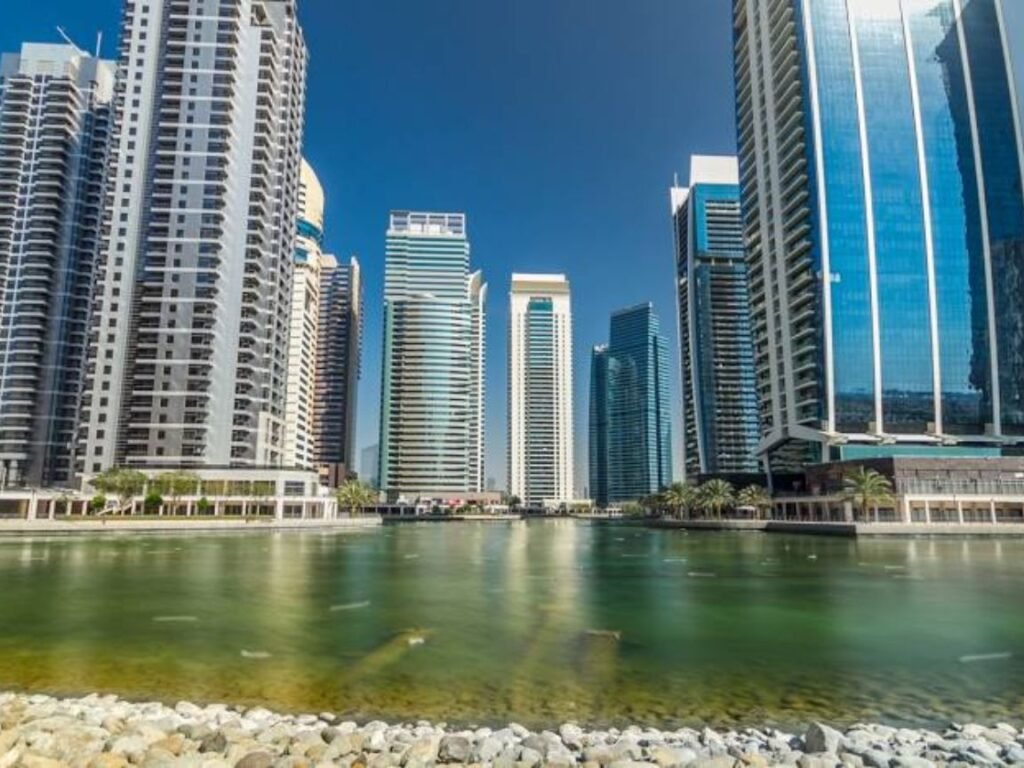
This is where the majority of professional expats land, and for good reason. Jumeirah Lakes Towers (JLT), Dubai Hills Estate, and Al Barsha offer one-bedrooms in the AED 5,500–7,500/month range and two-bedrooms between AED 9,000–13,000/month. These areas are well-connected — JLT has two Metro stations, Al Barsha is close to Mall of the Emirates — and they tend to offer better value per square foot than the premium zones.
Value Locations (Deira, Al Nahda, International City, Dubai Silicon Oasis)
A one-bedroom in Deira or Al Nahda can come in around AED 3,500–5,000/month. These areas are functional and affordable but require more commuting time and do not offer the lifestyle infrastructure that most Western expats define as comfortable. If you are working to maximize savings and the lifestyle amenities matter less, these areas are viable. If your goal is comfort and ease, the trade-off is real.
Neighborhood-Level Rent Comparison (1BR Apartment, 2026)
| Neighborhood | Monthly Rent (AED) | Monthly Rent (USD) | Metro Access |
|---|---|---|---|
| Downtown Dubai | 9,500–14,000 | 2,588–3,813 | Yes (Burj Khalifa/Downtown) |
| Dubai Marina / JBR | 8,000–12,000 | 2,179–3,268 | Yes (DMCC, JBR tram) |
| JLT | 5,500–7,500 | 1,498–2,042 | Yes (DMCC, Sobha Realty) |
| Dubai Hills Estate | 6,500–9,000 | 1,770–2,451 | No (car dependent) |
| Al Barsha | 5,000–7,000 | 1,362–1,906 | Nearby (Mall of Emirates) |
| Sports City / Motor City | 4,500–6,000 | 1,225–1,634 | No |
| Deira / Al Nahda | 3,500–5,000 | 953–1,362 | Yes (multiple stations) |
Day-to-Day Costs: What Comfortable Actually Looks Like
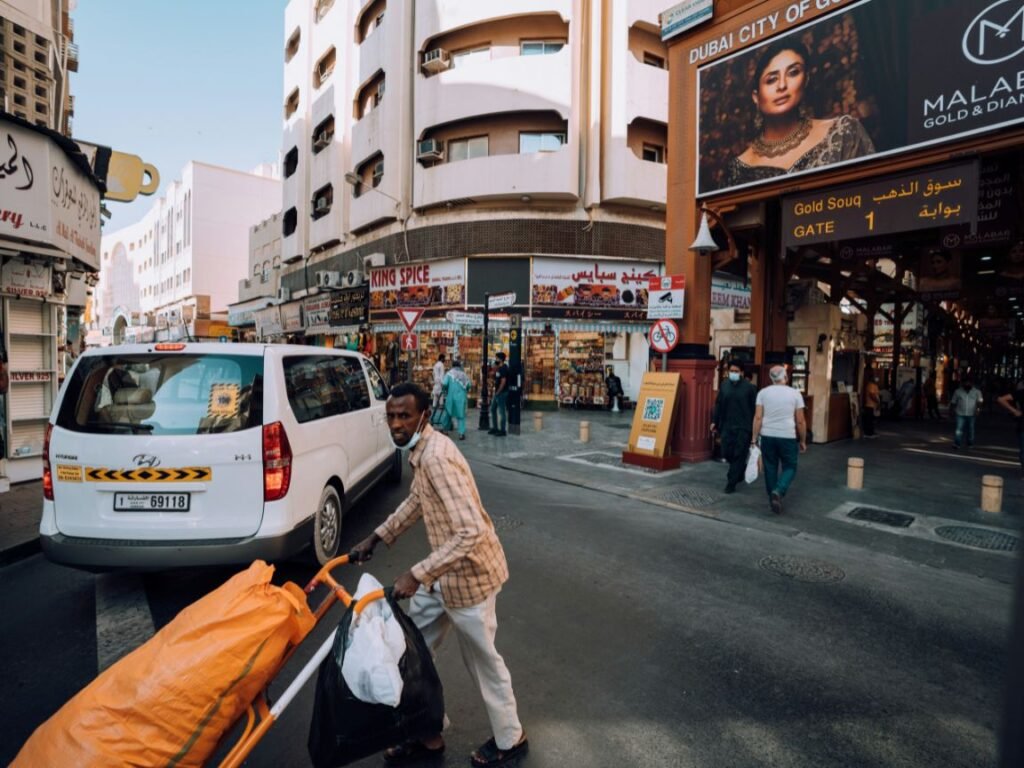
Once rent is settled, day-to-day spending in Dubai is more manageable than the city’s luxury reputation suggests. Groceries from Lulu Hypermarket, Carrefour, or Union Coop are competitively priced, particularly for fresh produce and staples. A single person shopping without extreme economy can comfortably stay within AED 1,200–1,800 per month.
Utilities in Dubai come from DEWA (Dubai Electricity and Water Authority) and follow a tiered tariff structure. A typical one-bedroom will run AED 400–600 in winter months, but summer bills — when the AC runs continuously — regularly climb to AED 800–1,200. Budget the higher figure year-round to avoid surprises. Internet from Etisalat or du costs AED 250–400/month for a standard home connection.
Dining and Entertainment
Dubai has a genuine middle-ground restaurant scene that tends to get overlooked. You do not have to choose between a AED 30 shawarma from a roadside stall and a AED 600 dinner at a beach club. A sit-down lunch at a solid mid-range restaurant runs AED 50–100 per person; dinner at a decent spot with a drink or two lands at AED 120–200. Comfortable dining for a couple — eating out three to four times a week — fits within AED 2,500–4,000/month without stretching.
Transport: Car vs. Metro for a Comfortable Life

This is a budget question as much as a lifestyle one. Dubai’s Metro is efficient, air-conditioned, and cheap — a monthly pass runs around AED 300–350. If you live within walking distance of a Metro station and work in an office connected to the network, public transport alone is viable. JLT, Downtown, and Business Bay residents can genuinely Metro-commute.
Car ownership changes the numbers considerably. Petrol is cheap — approximately AED 2.82 per litre as of early 2026 — but insurance, parking in central areas, and occasional Salik (toll) charges add up. A mid-range family sedan runs roughly AED 1,200–1,800/month in total ownership costs (insurance, fuel, maintenance). For families in car-dependent areas like Dubai Hills or Sports City, this is a fixed cost, not optional.
The Number Nobody Talks About: What This Salary Unlocks in Dubai vs. Back Home

This is the section you will not find in most cost-of-living guides, and it is arguably the most important one.
When someone in London earns GBP 60,000 per year, they take home roughly GBP 43,500 after income tax and National Insurance — approximately AED 202,000 net annually, or about AED 16,800/month. At that take-home, a comfortable London life — one-bedroom in Zone 2, regular dining out, annual holiday — is tight.
A Dubai salary of AED 20,000/month is paid in full. Zero income tax, zero social contributions deducted at source. That is the same gross and net figure: AED 240,000 per year. After a comfortable Dubai lifestyle costs of AED 13,000–14,000/month, you are looking at AED 6,000–7,000 in monthly surplus — a savings rate that is genuinely difficult to achieve in London, Toronto, or Sydney on an equivalent role.
The comparison becomes even more stark with specific numbers:
| City | Gross Salary | Tax Deductions | Net Take-Home (Monthly) | Comfortable Living Cost | Monthly Surplus |
|---|---|---|---|---|---|
| Dubai | AED 20,000 | AED 0 | AED 20,000 | AED 13,000 | AED 7,000 |
| London (GBP equivalent ~£5,450/mo) | AED 20,000 equiv. | ~30% | AED 14,000 | AED 18,000 equiv. | Deficit |
| New York (USD equivalent ~$5,450/mo) | AED 20,000 equiv. | ~28% | AED 14,400 | AED 19,500 equiv. | Deficit |
| Toronto (CAD equivalent) | AED 20,000 equiv. | ~30% | AED 14,000 | AED 16,000 equiv. | Deficit |
Dubai’s cost of living is already approximately 39% lower than New York when rent is excluded. Add zero personal income tax, and the purchasing power gap between Dubai and a major Western city is far wider than the headline salary figure implies. This is why an AED 18,000–20,000 salary in Dubai frequently delivers a better quality of life — measured in space, savings, and financial breathing room — than an AED-equivalent gross salary in London or New York.
This is not a pitch for Dubai. It is math. And it is the math that a serious expat needs to run before comparing offers across cities.
Visa Salary Thresholds: What “Comfortable” Also Needs to Unlock

Here is something most cost-of-living articles completely skip: your salary does not just determine your lifestyle — it determines what residency and sponsorship rights you actually have in the UAE.
These are the current salary thresholds are set by the UAE Federal Authority for Identity, Citizenship, Customs and Port Security that matter:
Family Residence Sponsorship: To bring a spouse and children to Dubai, you need a minimum salary of AED 4,000/month (or AED 3,000 with employer-provided housing). This is the legal floor — but at AED 4,000, the actual family lifestyle cost math does not work. You need it for the visa; you need far more to live comfortably.
UAE Green Visa (Self-Sponsored): Skilled professionals can self-sponsor a 5-year residency without employer dependency if they earn at least AED 15,000/month and hold a bachelor’s degree or equivalent. This is a meaningful threshold — at AED 15,000, you are also at the floor of what most people call comfortable for a single person.
UAE Golden Visa (Skilled Professional Route): The current threshold for salaried professionals is AED 30,000/month basic salary plus a relevant degree. This is the benchmark for top-tier expat packages and opens a 10-year residency without any employer sponsorship.
Digital Nomad / Virtual Working Visa: Requires a minimum monthly income of USD 3,500 (approximately AED 12,850) for remote workers employed by companies outside the UAE.
What this means practically: if you are aiming for comfortable living plus long-term residency security, the AED 15,000–20,000 range is where both goals converge for a single person. Below that, you may live reasonably, but you remain employer-dependent for your residency — which is a real vulnerability in a market where restructuring and layoffs do happen.
For a family, the comfortable + Green Visa math requires at least AED 20,000–25,000 to cover both lifestyle costs and the sponsorship eligibility for dependents without financial stress.
How Much Is Enough for Families: The School Fee Reality

No conversation about how much money you need to live comfortably in Dubai is honest without confronting school fees directly. There is no state-funded schooling for expatriate children in Dubai — every child attends private school, full stop.
Fees range from approximately AED 12,500 to AED 150,000 per year, depending on curriculum and institution. The most popular curriculums among Western expats — British, American, and IB — cluster between AED 40,000–90,000 per year per child at mid-to-good institutions.
That translates to AED 3,300–7,500 per month per child added to the family budget. Two school-age children in mid-tier British curriculum schools could add AED 100,000–120,000 per year in school fees alone. No budget model for a Dubai family is reliable unless school costs are calculated first, before estimating everything else.
Many employers — particularly in finance, oil and gas, consulting, and senior tech roles — include school fee allowances in the package. If your employer does not, and you have two or more school-age children, the salary floor for comfortable family living in Dubai rises sharply to AED 40,000–50,000/month.
For related context on salary benchmarking at specific income levels, see our detailed guide to what salary you need to live in Dubai and our analysis of whether USD 6,000 is a good salary in Dubai.
Healthcare Costs: What Comfortable Coverage Actually Costs
Health insurance is mandatory for all residents in Dubai. Many employers provide it as part of the package — but the coverage quality varies enormously. A basic employer plan often covers emergencies and outpatient visits but excludes dental, vision, and specialist consultations without referral chains.
A private mid-tier health insurance policy for a single person runs AED 500–900/month. Family coverage scales up significantly — a family of four on a decent plan sits at AED 1,500–3,000/month depending on the insurer, age of family members, and coverage tier. Budget for supplemental dental separately if that coverage matters to you; most standard plans cap dental at minimal levels.
Comfortable Living on Specific Salary Brackets
To make this practical, here is how specific salary levels translate to real comfort in Dubai.
AED 10,000–12,000/Month
Survivable for a single person who is strategic about rent (Deira, Al Nahda, shared accommodation), cooks at home most nights, and uses the Metro. Not comfortable by most people’s standards — financial anxiety is present, savings are minimal. Our breakdown of whether AED 3,000 is a good starting salary in Dubai explores the lower end of this range.
AED 12,000–15,000/Month
The genuine threshold for single-person comfort. A one-bedroom in JLT or Al Barsha, groceries without anxiety, regular dining out, and the Metro as primary transport. Limited savings — roughly AED 1,000–3,000/month if disciplined.
AED 15,000–20,000/Month
Comfortable with savings for a single person. Green Visa eligibility unlocked. One-bedroom in Marina or mid-tier with some lifestyle upgrades. This is the sweet spot most professional expats target. Our guide on living in Dubai on a AED 4,000 salary shows, by contrast, how far below comfortable that figure sits.
AED 25,000–35,000/Month
Comfortable for a couple or a family without school-age children. Two-bedroom in a good area, car ownership, regular travel, healthy savings. If you have one school-age child, fees will absorb most of the surplus at this level.
AED 40,000+/Month
Comfortable for a family with two school-age children in mid-tier international schools, including savings and one annual family holiday. This is where the package math typically needs to include school fee allowances to work.
Final Verdict
How much money do you need to live comfortably in Dubai? The honest answer is that no single number covers every situation, but here are the definitive figures:
Single professional: AED 12,000–15,000/month is the floor for genuine comfort. At AED 15,000, you qualify for the UAE Green Visa and can live well in a mid-tier area with room to save.
Couple without children: AED 18,000–25,000/month covers a comfortable two-bedroom, joint lifestyle costs, and meaningful savings.
Family with two school-age children: AED 40,000–50,000/month is the realistic target — less than this and school fees consume the budget, leaving no financial breathing room.
The tax-free environment is real and it matters. A comfortable Dubai lifestyle at AED 15,000/month is the equivalent of earning significantly more in a high-tax market and still coming out ahead on both savings and lifestyle. But that advantage only materializes if you budget honestly — especially for rent and school fees — before you arrive, not after.
Frequently Asked Questions
What is the minimum salary to live comfortably in Dubai as a single person? Most expats find that AED 12,000–15,000/month (approximately USD 3,270–4,085) is the realistic floor for comfortable living as a single person in Dubai. Below AED 10,000, lifestyle sacrifices become significant.
Can a family of four live comfortably on AED 25,000/month in Dubai? Without school-age children, yes — AED 25,000/month covers a comfortable three-bedroom in a mid-tier area, transport, groceries, and some savings. With two school-age children in international schools, this salary becomes tight; school fees alone can consume AED 7,000–15,000 of it.
Is AED 20,000 a good salary in Dubai in 2026? For a single professional or a couple without children, AED 20,000 is a strong salary that supports comfortable living and meaningful savings. It also meets the Green Visa income threshold of AED 15,000, offering five-year self-sponsored residency. For a family with children in private school, AED 20,000 is manageable but leaves little surplus.
How much does rent cost for a comfortable apartment in Dubai? A comfortable one-bedroom in a well-located mid-tier area (JLT, Al Barsha, Dubai Hills) runs AED 5,500–8,000/month. A comfortable two-bedroom in the same areas runs AED 9,000–13,000/month. Downtown and Marina are 20–40% higher.
How does Dubai’s cost of living compare to London or New York after tax? On a net take-home basis, Dubai is significantly cheaper. A AED 20,000 salary in Dubai is fully take-home. The same gross in London would net roughly AED 14,000 after income tax and National Insurance — yet London’s comfortable living costs exceed Dubai’s. The purchasing power differential is wider than most people expect before they run the numbers.
Do I need a car to live comfortably in Dubai? It depends on where you live. Residents in JLT, Downtown, Business Bay, Deira, or Bur Dubai can live comfortably on Metro and ride-hailing apps. Residents in Dubai Hills, Sports City, Motor City, or the outer residential communities need a car. Factor in AED 1,200–2,000/month for total car running costs.
What is the most underestimated cost of living in Dubai for expats? School fees, consistently. Expats who arrive without children and later start families are regularly caught off-guard by the compulsory private school system and fees that start at AED 1,000+/month for younger children and climb steeply for older year groups. Budget for this before it is relevant, not after.