
Is 3000 AED a Good Salary in Dubai? The Honest Truth in 2026
Is 3000 AED a good salary in Dubai? This is one of the most common questions asked by job seekers and fresh expats who receive entry-level offers in the UAE. Dubai is one of the most glamorous and sought-after cities in the world — but it comes with a price tag to match. Before packing your bags, you need to understand exactly what 3000 AED per month means in real terms inside one of the Middle East’s most expensive cities.
To put this salary in perspective, 3000 AED is approximately $817 USD per month — a figure that sounds modest even by global standards. According to Numbeo’s real-time Dubai cost of living data, basic expenses for a single person in Dubai consistently exceed what most low-salary earners bring home each month. The math simply does not add up without additional employer-provided benefits.
The average salary in Dubai sits at around AED 15,700 per month — meaning 3000 AED is less than one-fifth of what the average Dubai resident earns. Expat cost data consistently shows that accommodation costs alone can consume a third or more of a resident’s monthly income — and at 3000 AED, housing costs threaten to swallow your entire paycheck.
So let’s break it all down — from rent and groceries to banking access and salary benchmarks — so you can make a fully informed decision about whether is 3000 AED a good salary in Dubai for your specific situation in 2026.
Table of Contents
What Does 3000 AED Actually Get You in Dubai?
Before diving into the numbers, it helps to understand the UAE salary structure. In Dubai, salaries are typically made up of:
- Basic salary, usually 60% of gross pay
- Housing allowance
- Transport allowance
- Other benefits such as meals, health insurance, and education allowances
When an employer offers you a 3000 AED package, the critical question is whether that figure is your cash-in-hand salary or your total compensation including all benefits. These are very different things. A 3000 AED cash salary with full employer-provided accommodation, food, and transport is a very different reality from 3000 AED with nothing else attached.
The Real Cost of Living in Dubai: A Full Breakdown
Housing and Accommodation
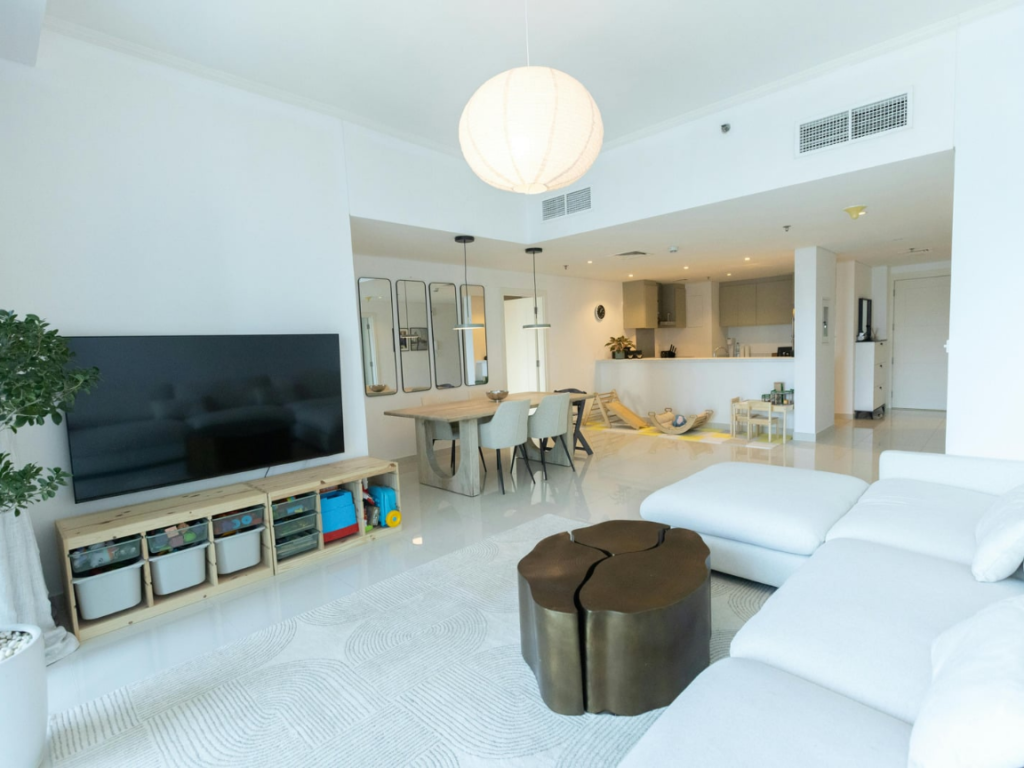
Accommodation is almost always the single largest expense for anyone living in Dubai. Rent typically accounts for 40–60% of total monthly spending, and prices vary enormously depending on location and property type.
Here is what you can realistically expect to pay in 2026:
- Bed space in a shared flat (Deira, International City): AED 500–900 per month
- Shared room (2–3 people per room): AED 900–1,500 per month
- Studio apartment in an affordable area (JVC, Al Barsha South): AED 3,000–4,500 per month
- 1-bedroom apartment in a central area (Business Bay, Marina): AED 8,000–10,000 or more per month
If your salary is 3000 AED, paying rent independently will consume most or all of your income — this is why many low-income workers in Dubai share apartments or rent only a bed space.
Food and Groceries

Food costs in Dubai depend heavily on your habits. Those who cook at home and shop at budget supermarkets fare far better than those who eat out regularly.
- Monthly groceries for a single person: AED 800–1,200
- Meal at a budget restaurant: AED 25–40
- Monthly food budget eating out regularly: AED 1,500–2,500 or more
A single person can expect to spend between AED 800 and AED 1,200 monthly on groceries alone. Budget supermarket chains like Carrefour, Lulu Hypermarket, and Union Coop are your best allies when managing a 3000 AED salary in Dubai.
Transport

On a 3000 AED salary in Dubai, owning a car is simply not realistic. Here is what public and private transport looks like:
- Monthly Nol Card metro pass: AED 300
- Taxi base fare: AED 12, plus AED 2.50 per km
- Monthly transport budget using public transit only: AED 300–500
- Car ownership including loan, insurance, and fuel: AED 2,000–3,500 per month — completely out of reach at this salary level
Public transport via the Nol Card is efficient and affordable, while owning a car adds insurance, fuel, and loan costs that are simply unmanageable at this salary level.
Utilities and Internet
Utilities in Dubai are a non-negotiable expense, particularly air conditioning, which runs year-round due to the extreme heat.
- DEWA — electricity and water: AED 300–600 per month for a shared flat
- Internet via Etisalat or Du: AED 300–400 per month
- Mobile plan: AED 150–250 per month
- Total estimated utilities: AED 700–1,000 per month
Utilities and internet typically cost around AED 700 per month, covering air conditioning, electricity, water, and high-speed internet — and this figure is usually lower when living in shared accommodation where costs are divided among multiple residents.
Health Insurance
This is one area where Dubai law protects employees. It is a legal requirement for all employers in Dubai to provide employees with a minimum level of healthcare coverage. Always confirm in writing that health insurance is included in your offer before signing any contract — this is especially critical when evaluating whether is 3000 AED a good salary in Dubai for your needs.
Monthly Budget Reality Check: The Hard Numbers

Here is what the monthly budget looks like for a single person living in shared accommodation on 3000 AED in Dubai:
| Expense | Estimated Monthly Cost (AED) |
|---|---|
| Bed space or shared room | 700–1,200 |
| Groceries | 800–1,200 |
| Transport (public) | 300–500 |
| Utilities (shared) | 350–500 |
| Mobile plan | 150–200 |
| Total | 2,300–3,600 |
Adding everything together, a single person in Dubai spends around AED 2,000–3,000 per month on essential needs alone — and that is before accounting for accommodation.
The conclusion is stark. On 3000 AED, you are either breaking even or going into debt every single month unless your employer covers your housing and other core expenses.
Who Might a 3000 AED Salary in Dubai Actually Work For?
Despite the challenging numbers, there are limited scenarios where 3000 AED can be workable:
- Workers whose employer provides free accommodation, meals, transport, and health insurance. In this case, 3000 AED becomes purely pocket money. This arrangement is common in hospitality, construction, domestic work, and certain retail roles.
- Those sharing a room with multiple people and cooking every meal at home, who may just about break even each month.
- Individuals using the role as a short-term stepping stone to gain UAE work experience while actively searching for better-paying positions.
On the other hand, a 3000 AED salary in Dubai is completely unsuitable for:
- Anyone renting independently — this is essentially impossible without running a monthly deficit
- People with family dependents — family sponsorship in the UAE requires a minimum of AED 4,000 per month
- Anyone seeking financial stability, savings, or long-term security in Dubai
How 3000 AED Compares to Dubai Salary Benchmarks in 2026
To truly answer whether is 3000 AED a good salary in Dubai, it helps to see where it sits across the broader market:
| Lifestyle | Recommended Monthly Salary |
|---|---|
| Bare survival (shared room, no car) | AED 5,000–7,000 |
| Basic comfortable, single person | AED 7,000–10,000 |
| Comfortable with modest savings | AED 10,000–15,000 |
| Family lifestyle | AED 20,000 or more |
| 3000 AED | Below all benchmarks |
A salary of AED 10,000–15,000 per month is considered pretty decent in Dubai, with genuine potential to save after covering all expenses.
The UAE also applies informal visa-linked salary benchmarks set by the Ministry of Human Resources and Emiratisation:
- University graduates: AED 12,000 per month benchmark
- Skilled technicians: AED 7,000 per month benchmark
- Skilled labourers: AED 5,000 per month benchmark
The UAE does not apply a blanket minimum wage for expatriates — pay scales follow visa-linked thresholds and market benchmarks instead. This means 3000 AED is technically legal but falls well below every recommended threshold for skilled workers.
For the full salary breakdown by lifestyle tier, visit our What Salary Do You Need to Live in Dubai? guide.
Banking and Financial Services: A Hidden Limitation of a 3000 AED Salary in Dubai
One aspect of earning 3000 AED in Dubai that rarely gets discussed is the impact on your access to financial services.
- Most banks maintain informal minimum salary thresholds for credit cards, personal loans, and premium accounts
- The UAE has removed the formal AED 5,000 minimum salary requirement for personal loan approvals — banks now set their own eligibility criteria based on credit scoring, employment stability, and employer reputation
- In practice, earning 3000 AED still makes it very difficult to access credit products or car finance
- Experts warn that for someone earning under AED 5,000, the biggest financial mistake is borrowing without a clear understanding of long-term affordability
A 3000 AED salary in Dubai significantly limits your financial mobility, and this is a practical reality that many first-time expats fail to anticipate.
8 Practical Tips If You Must Accept a 3000 AED Salary in Dubai

If this is your only option right now, here is how to make the most of it:
- Negotiate benefits rather than cash. Push hard for a housing allowance, transport allowance, or free meals. These benefits often carry more value than an equivalent cash increase.
- Choose bed spaces or shared rooms in affordable areas like Deira, International City, and Al Quoz, where shared living costs are the lowest in Dubai.
- Use the Dubai Metro exclusively. A monthly Nol Card pass at AED 300 is your most cost-effective transport solution.
- Cook all meals at home and shop at Lulu, Carrefour, or Union Coop for the most competitive grocery prices.
- Confirm health insurance in your contract before signing. Never assume it is included.
- Treat this role as temporary. Consider 3000 AED as temporary income and actively pursue higher-paying roles from day one.
- Upskill while you work. Dubai’s job market rewards certifications, technical skills, and language proficiency. Use any available time to build toward a better offer.
- Track every dirham carefully. Small daily expenses accumulate rapidly in a city like Dubai.
What Salary Should You Actually Target in Dubai in 2026?

If you have the opportunity to negotiate or are still comparing offers, here are the realistic salary targets to aim for:
- Single person, basic lifestyle: minimum AED 7,000–8,000 per month
- Single person, comfortable lifestyle with savings: AED 10,000–15,000 per month
- Couple sharing costs: combined AED 15,000–20,000 per month
- Family with school-age children: AED 20,000–30,000 or more per month
One advantage Dubai always offers: there is no personal income tax in Dubai, making it an attractive destination for professionals worldwide — but this advantage only becomes meaningful when the base salary is high enough to leverage it.
For a detailed breakdown of what $4,000 gets you, see Can I Live in Dubai with a $4000 Salary?
Frequently Asked Questions About 3000 AED Salary in Dubai
Is 3000 AED a good salary in Dubai?
No. A 3000 AED salary in Dubai is only enough for survival under very limited circumstances. It does not qualify for most financial services and is not sufficient for independent living.
Can I survive on 3000 AED in Dubai?
While possible with comprehensive employer-provided benefits and very careful budgeting, surviving on 3000 AED is extremely challenging and not recommended for long-term financial planning.
What is the minimum salary to live comfortably in Dubai in 2026?
For a single person, financial advisors recommend at least AED 7,000–8,000 per month for a basic comfortable lifestyle, while AED 10,000–15,000 per month allows for genuine comfort and consistent savings.
Is 5000 AED a good salary in Dubai?
A salary of 5000 AED is considered reasonable for an employee just starting their career and will cover basic living expenses, food, and transport — particularly when employer-provided accommodation is part of the package.
What is the average salary in Dubai in 2026?
The average salary in Dubai is approximately AED 15,700 per month. This figure varies significantly by industry, experience level, and role.
Does Dubai have a minimum wage?
The UAE does not apply a blanket minimum wage for either Emirati nationals or expatriates — pay is instead guided by market benchmarks and visa-linked salary thresholds.
Can I sponsor my family on 3000 AED in Dubai?
No. Family sponsorship in the UAE requires a minimum of AED 4,000 per month, or AED 3,000 if the employer provides housing. At a bare 3000 AED cash salary, sponsoring dependents is practically impossible.
What jobs in Dubai typically pay 3000 AED?
Roles in retail, hospitality, cleaning services, domestic work, and some entry-level administrative positions. These roles almost always include employer-provided accommodation and meals, which partially offset the low cash component.
Final Verdict: Is 3000 AED a Good Salary in Dubai?
Is 3000 AED a good salary in Dubai? The honest answer is no — not on its own.
A 3000 AED salary in Dubai is only enough for survival under very limited circumstances. It does not qualify for most financial services and is not sufficient for independent living.
The only scenario where it becomes manageable is when a comprehensive employer benefits package — covering accommodation, food, transport, and health insurance — is provided alongside it.
Key takeaways before making your decision:
- Always calculate the full value of your benefits package, not just the cash salary figure
- Negotiate hard for housing and transport allowances before signing any contract
- Target AED 7,000 as your absolute minimum if you are paying for accommodation independently
- Use a 3000 AED role only as a short-term entry point while pursuing better opportunities
- Do not relocate to Dubai with only 3000 AED and no employer-provided benefits — you will face financial difficulty from the very first month
Dubai is a city of genuine opportunity — but only for those who arrive with a salary that matches its cost of living. Know your worth, do your research, and never settle for less than what you need to live with dignity and financial stability.