Is 3000 KWD a Good Salary in Kuwait? The Honest Expat Answer
Is 3000 KWD a good salary in Kuwait? Yes — it is a strong, upper-middle-class income that comfortably covers a family lifestyle in Kuwait City with money left over to save each month. To put it bluntly: you will not be struggling on this salary, but how well you actually live depends on your family size, neighborhood choice, and whether rent is included in your package.
Kuwait’s cost of living is among the lowest in the Gulf region, and 3000 KWD translates to roughly $9,780 USD per month at current exchange rates — tax-free. For context, the average monthly net salary across all workers in Kuwait City sits closer to KWD 950, which means 3000 KWD places you firmly in the top tier of earners in the country. The question is not whether you can survive on it — you absolutely can — but rather what kind of life it actually buys you in Kuwait City in 2026.
Table of Contents
What Does 3000 KWD Actually Get You in Kuwait City?
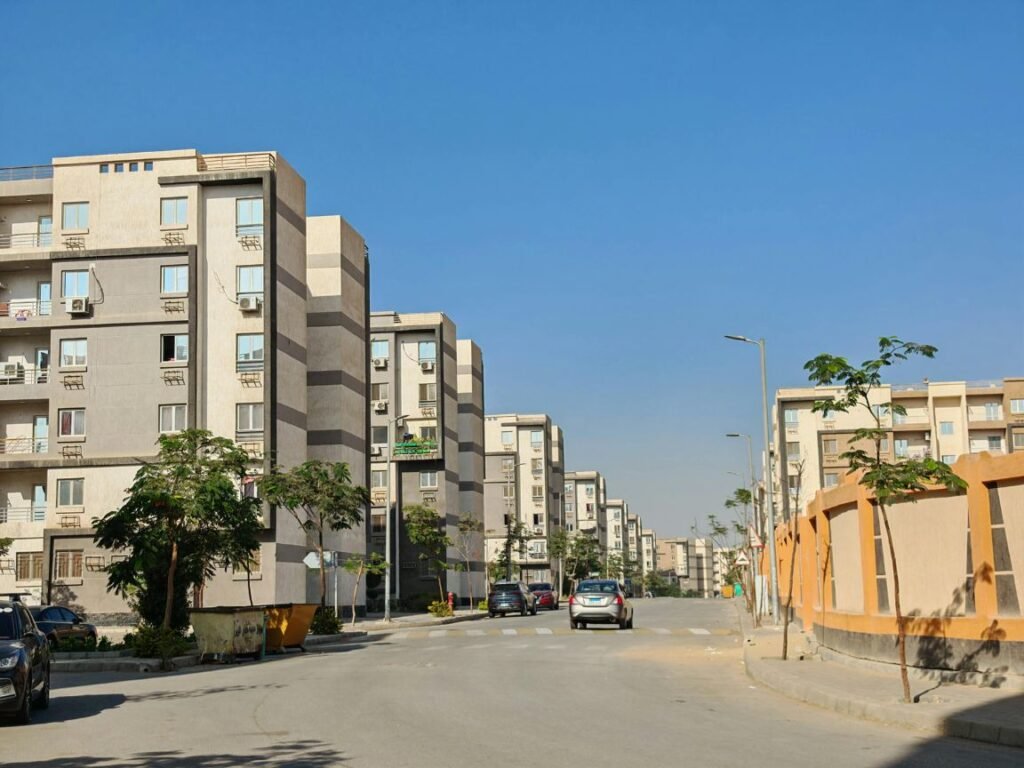
Before breaking down the numbers, it helps to understand what kind of city Kuwait City is for an expat. There is no income tax. There is no VAT on most basic goods. Fuel is heavily subsidized, making driving genuinely cheap. Alcohol is banned and not a budget line at all. Public utilities for a typical apartment cost KWD 15–30 per month — a fraction of what you would pay in London or Toronto.
All of this means that 3000 KWD goes further here than the raw number suggests. A professional earning the equivalent after-tax salary in Sydney or Toronto would be paying roughly 30–40% of their income in tax before even thinking about rent. In Kuwait, every dinar is yours to keep.
Rent: The Biggest Variable
Rent is where Kuwait City spending diverges most sharply by neighborhood and lifestyle. A 1-bedroom apartment in Salmiya, the most popular expat hub on the Gulf coast, runs KWD 300–500 per month for a decent unfurnished unit. Move inland to Jabriya or Salwa and comparable space drops to KWD 250–400. Families looking for a spacious 3-bedroom apartment in Rumaithiya or Bayan — two of the most sought-after family areas — should budget KWD 550–750 per month.
At 3000 KWD, even the highest rent scenario takes up less than 25% of your gross income. In most Gulf cities, financial planners recommend keeping housing under 30% — this salary clears that benchmark with ease across every major Kuwait City neighborhood.
Groceries, Dining, and Daily Life
Daily expenses in Kuwait City are genuinely affordable. Supermarket shopping for a family of four runs KWD 120–180 per month depending on how much you lean on imported Western brands versus local and regional staples. According to Numbeo’s Kuwait City cost of living data, A meal at an inexpensive restaurant costs around KWD 4, while a three-course dinner for two at a mid-range restaurant lands around KWD 20–25. A cappuccino costs approximately KWD 1.75.
Fuel, as noted, is almost negligible. A full tank on a mid-size sedan costs under KWD 5. Monthly transport costs including fuel and car maintenance run roughly KWD 60–100 for most expat households that drive.
Complete Monthly Budget Breakdown for Kuwait City on 3000 KWD
The table below covers two realistic scenarios: a single professional and a family of four, both living in Kuwait City on a 3000 KWD monthly salary (without a housing allowance built into the package).
Single Professional — Kuwait City
| Expense Category | KWD/Month | USD/Month (approx.) |
|---|---|---|
| Rent — 1BR in Salmiya | 380 | 1,240 |
| Groceries | 80 | 261 |
| Dining out (moderate) | 90 | 294 |
| Transport (car, fuel) | 70 | 228 |
| Utilities (electric, water, internet) | 30 | 98 |
| Healthcare / health insurance | 30 | 98 |
| Personal care & clothing | 50 | 163 |
| Entertainment & leisure | 80 | 261 |
| Savings / remittance | 2,190 | 7,150 |
| Total Spend | 810 | 2,643 |
At this lifestyle level, a single professional on 3000 KWD saves or remits over KWD 2,100 per month. This is exceptional by any global standard.
Family of Four — Kuwait City
| Expense Category | KWD/Month | USD/Month (approx.) |
|---|---|---|
| Rent — 3BR in Rumaithiya/Jabriya | 650 | 2,122 |
| Groceries | 160 | 522 |
| Dining out (family, moderate) | 120 | 392 |
| Transport (one car, fuel) | 90 | 294 |
| Utilities | 40 | 131 |
| Private school fees (1–2 kids) | 350–600 | 1,143–1,959 |
| Healthcare & insurance | 80 | 261 |
| Personal care & clothing | 90 | 294 |
| Entertainment & leisure | 100 | 326 |
| Residency fees (spouse + 2 kids) | ~20–30 | ~65–98 |
| Monthly Spend (low school est.) | ~1,700 | ~5,550 |
| Remaining / Savings | ~1,300 | ~4,240 |
The wildcard for families is school fees. International schools in Kuwait City charge KWD 250–600 per child per month depending on curriculum. Even factoring this in, a family on 3000 KWD has meaningful room to save — something difficult to say about equivalent salaries in Dubai or Doha once housing costs are added.
How 3000 KWD Compares Across the Gulf
For anyone evaluating Gulf salary offers, this comparison matters. 3000 KWD equals roughly $9,780 USD per month. Run that number through the lens of other Gulf cities:
- In Dubai, AED 35,800 (the equivalent) is considered upper-tier. But Dubai’s rent for a 3-bedroom apartment in a decent area runs AED 12,000–18,000 per month — far higher than Kuwait City’s KWD 550–750. See our breakdown of what salary you need to live in Dubai for a direct comparison.
- In Doha, the equivalent QAR salary is similarly strong, but utility costs and school fees are higher. Our guide on what is a good salary to live in Doha covers that in detail.
- In Riyadh, housing is increasingly expensive in expat-popular compounds. Our how much salary is enough to live in Riyadh article shows why the Riyadh cost equation has shifted dramatically in recent years.
On a purchasing-power basis, 3000 KWD in Kuwait City provides a lifestyle equivalent to earning roughly $14,000–$15,000 net after tax in a comparable Western city like Toronto, Sydney, or Munich — primarily because of zero income tax, subsidized fuel, and significantly lower utility and food costs.
The Visa Salary Threshold: What 3000 KWD Means for Your Family’s Residency
This is the section most expat salary articles skip, and it matters enormously. Kuwait’s residency regulations underwent a major overhaul in late 2025. Under Ministerial Resolution No. 2249 of 2025, which took effect on December 23, 2025, the confirmed minimum monthly salary to sponsor a spouse and children under a dependent visa (Article 22) is KWD 800 per month — as confirmed by the Kuwait Ministry of Interior.
At 3000 KWD, you clear this threshold by nearly four times. This has several practical implications:
- You can legally bring your entire immediate family to Kuwait City without salary complications.
- You are well-insulated against the compliance crackdowns that Kuwait’s Residence Affairs Investigations Department began in 2025, targeting expats who fell below KWD 800 after job changes.
- Your family visa eligibility remains stable even if your salary adjusts slightly downward due to restructuring or a job transfer — you have KWD 2,200 of buffer before hitting the minimum threshold.
For parents hoping to bring dependent parents (not just spouses and children), the process is more complex and involves higher annual fees of KWD 300 per person per year under the 2025 reforms. That is still very manageable on this salary.
One additional note: Kuwait’s new framework also introduced long-term residency permits of up to 15 years for qualifying foreign nationals. While details of exact thresholds for this category are still being clarified by the Ministry of Interior, expats earning 3000 KWD and above are well-positioned to qualify as eligibility criteria are published.
Neighborhood-Level Reality: Where 3000 KWD Expats Actually Live

Understanding Kuwait City’s geography is essential for making this salary work at its full potential. The city is not as consolidated as Dubai — neighborhoods sit across multiple governorates and have distinct expat profiles.
Salmiya (Hawalli Governorate)
The most popular expat district. Beachfront access, dense restaurant scene, short distance to the American and British schools. A 2-bedroom apartment runs KWD 400–600 per month. On 3000 KWD, Salmiya is accessible and leaves substantial room for saving. The trade-off is traffic — Salmiya gets congested, particularly near the Gulf Road.
Jabriya (Hawalli Governorate)
A quieter, more residential alternative to Salmiya. Popular with expats who have children and want proximity to universities and international schools without paying Salmiya premiums. 3-bedroom apartments rent for KWD 450–570 per month — strong value for a family. Several good dining options have opened in the area in recent years.
Rumaithiya (Hawalli Governorate)
Premium family territory. Spacious apartments, well-maintained buildings, and close to several international schools. 3-bedroom apartments start at KWD 550 and can go higher for fully furnished or newly built units. On 3000 KWD, this is a comfortable fit for families without a housing allowance.
Mishref and Bayan (Ahmadi Governorate)
Quieter, more suburban, preferred by families wanting villa-style living at apartment prices. 3-bedroom apartments in Mishref run KWD 500–650 per month. The trade-off is a longer commute if you work in Kuwait City center, but the quality of life — space, calm streets, proximity to good schools — is high.
Mahboula and Fintas (Ahmadi Governorate)
Budget-friendly coastal areas popular with mid-income expats. 1-bedroom units from KWD 150–250. On 3000 KWD, living here means dramatically higher savings rates, though the commute to central Kuwait City takes 30–45 minutes.
Purchasing Power Comparison: 3000 KWD vs. Western Salaries After Tax
What 3000 KWD Looks Like Compared to a Western City Income
This is the calculation that matters most when evaluating a Kuwait offer, and almost no one runs it properly.
3000 KWD per month = $9,780 USD gross. In Kuwait: zero income tax. Take-home: $9,780.
Now consider a comparable professional in Toronto earning CAD 135,000 annually — about $9,800 USD per month gross. After federal and provincial income tax, CPP, and EI, take-home drops to roughly CAD 7,800/month (~$5,700 USD). Then subtract average Toronto rent for a 2-bedroom at roughly CAD 2,800/month. Disposable income after housing: ~CAD 5,000/month.
In Kuwait City on 3000 KWD: after a Salmiya 2-bedroom rent at KWD 450 ($1,470), disposable income is roughly KWD 2,550 ($8,310). The Kuwait expat has 66% more disposable income after housing, despite ostensibly similar gross pay.
The same exercise holds against Sydney, London, or Munich. The combination of zero tax and substantially lower housing costs makes 3000 KWD a genuinely wealth-building salary — not just a comfortable one.
For reference, also see our analysis of is 3000 AED a good salary in Dubai to understand how dramatically salary purchasing power varies between Gulf cities at the same numeric figure.
Is 3000 KWD Enough for a Family? A Realistic Assessment
The School Fees Question
For families with school-age children, the honest answer is that 3000 KWD is sufficient but not unlimited. Kuwait has a strong selection of British, American, Indian, and Pakistani curriculum schools. Fees vary considerably:
- Indian and Pakistani curriculum schools: KWD 80–150 per child per month
- British curriculum (e.g., The English School, New English School): KWD 250–450 per child per month
- American curriculum schools: KWD 350–600 per child per month
A family with two children in a British curriculum school pays KWD 500–900 per month in fees alone, on top of KWD 650 in rent. That puts total fixed costs at KWD 1,150–1,550 — leaving KWD 1,450–1,850 for everything else. This is workable and still leaves room to save, but it is not lavish. Families expecting premium international school education plus premium housing on this salary will feel stretched.
Healthcare and Insurance
Kuwait mandates health insurance for residency renewal as of 2025. Most employers at this salary level include health insurance in the package; if yours does not, budget KWD 50–100 per month for a solid private plan covering you and your family. Public health facilities are available to expats but are generally used only for basic consultations.
Final Verdict
Is 3000 KWD a good salary in Kuwait? Unambiguously yes. For a single professional, it is exceptional — the kind of salary that builds savings at a rate almost impossible to replicate in a Western city after tax. For a family of four, it is solidly comfortable, capable of funding a spacious apartment in a desirable neighborhood, private schooling for one or two children, and meaningful monthly savings, without requiring extreme lifestyle sacrifices.
The caveats are real but manageable. School fees are the primary wildcard for families. Housing in premium areas like Rumaithiya or Salmiya runs higher than expats sometimes expect. And Kuwait’s 2025 residency law changes mean administrative costs for dependents are modestly higher than they were.
But step back and look at the full picture: $9,780 USD per month, zero tax, subsidized fuel, low utilities, and a family visa threshold you clear four times over. In most Gulf cities — let alone Western ones — you would need to earn significantly more to achieve the same net financial position. Three thousand Kuwaiti dinars is not just good. It is among the more powerful monthly salaries an expat can hold in the Gulf right now.
FAQ: Is 3000 KWD a Good Salary in Kuwait?
Is 3000 KWD enough to live comfortably in Kuwait City with a family? Yes. A family of four on 3000 KWD can rent a spacious 3-bedroom apartment in Jabriya or Rumaithiya for KWD 500–700, cover school fees for one or two children in a British curriculum school, and still save KWD 800–1,200 per month depending on lifestyle choices.
Is 3000 KWD a high salary in Kuwait compared to the average? Very much so. The average net monthly salary in Kuwait City is approximately KWD 950. At 3000 KWD, you earn more than three times the median take-home income in the city.
Can I bring my family to Kuwait on a 3000 KWD salary? Yes. Kuwait’s 2025 residency law sets the minimum salary to sponsor a spouse and children at KWD 800 per month. At 3000 KWD, you comfortably exceed this requirement.
How much should I budget for rent on 3000 KWD in Kuwait City? A reasonable benchmark is KWD 350–700 depending on family size and neighborhood preference. Salmiya and Rumaithiya are the most popular expat neighborhoods; Jabriya and Salwa offer similar quality at slightly lower rates.
Is 3000 KWD better than an equivalent salary in Dubai? On a purchasing-power basis, yes — primarily because Kuwait’s rent and utility costs are significantly lower than Dubai’s. A 3-bedroom apartment in a good Kuwait City neighborhood costs roughly half of what a comparable Dubai unit would in a family-friendly area.
Does Kuwait have income tax on a 3000 KWD salary? No. Kuwait has no personal income tax. Your 3000 KWD is your full take-home pay. There is no VAT on most goods and services, though a 5% VAT framework has been discussed but not implemented as of mid-2026.
What are the best neighborhoods for expats earning 3000 KWD in Kuwait City? At this income level, Salmiya, Jabriya, Rumaithiya, and Bayan are all realistic options. Salmiya suits single professionals and couples who want a vibrant, walkable area. Rumaithiya and Bayan suit families who prioritize space, schools, and quieter streets.
For more Gulf salary comparisons, see our guides on how much money you need to live in the Gulf and is 6,000 USD a good salary in Dubai.