

How Much Salary Is Enough to Live in Riyadh? The Honest 2026 Guide
How much salary is enough to live in Riyadh depends entirely on your life setup: a single professional can survive reasonably on SAR 8,000–10,000 per month, while a family with children in an international school needs at least SAR 25,000–30,000 to live with any comfort. The no-income-tax environment stretches your riyal further than equivalent gross pay in London or Toronto, but housing, schooling, and the invisible costs of compound living add up faster than most job offer letters prepare you for.
Riyadh is not a cheap city. It is an affordable one when your salary is structured correctly — and that distinction matters. This guide breaks down exactly what you need to earn, where that money goes, and the salary thresholds that determine your visa classification, family sponsorship rights, and quality of life in the Saudi capital in 2026.
How Much Salary Is Enough to Live in Riyadh: The Real Numbers by Lifestyle
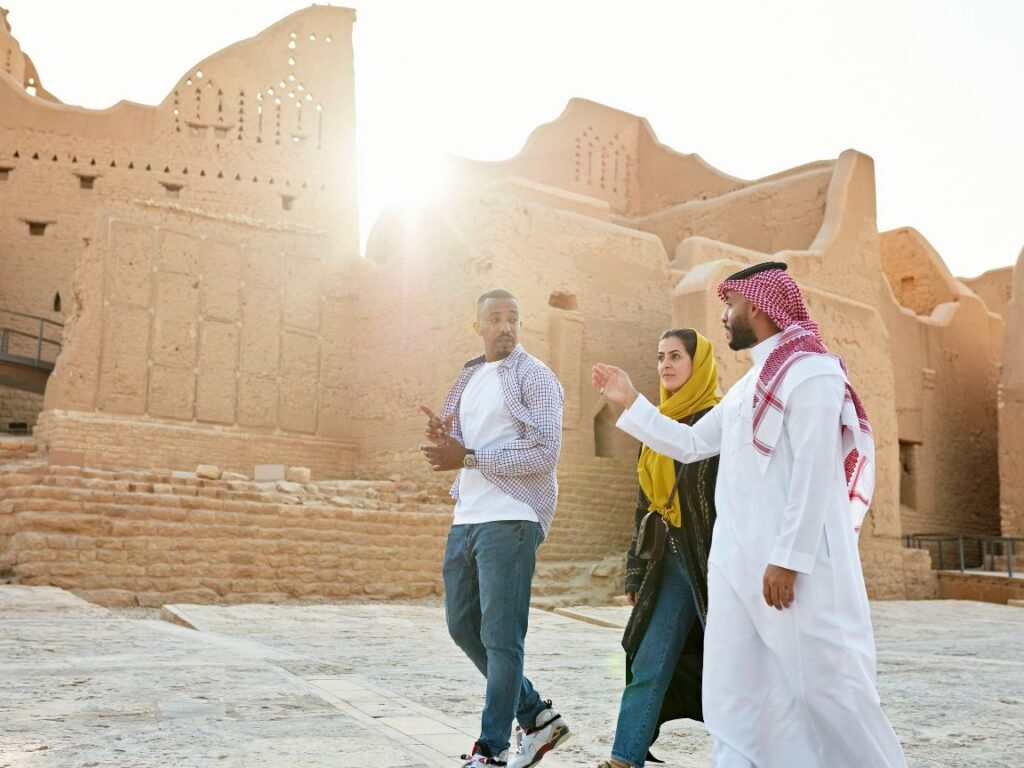
There is no single answer because Riyadh serves three completely different populations at three completely different price points. A young South Asian engineer fresh from a first posting lives a full, comfortable life on SAR 8,000. A Western mid-career professional with a spouse and two kids in an international school needs four times that amount before they feel they are not subsidizing their lifestyle with savings.
The benchmarks below are built from Numbeo’s Riyadh cost of living data and reflect what expats actually report spending in 2026.
Single Expat: The Minimum Comfortable Salary
For a single professional renting an unfurnished one-bedroom apartment in a mid-range neighborhood like Al Sulaymaniyah or Qurtubah, monthly costs outside rent sit around SAR 3,254 based on Numbeo’s 2026 estimator. Add a SAR 2,200–3,000 rent bill and you are at roughly SAR 5,500–6,500 in total outgoings before any savings or lifestyle spend. A salary of SAR 8,000–10,000 gives you breathing room, a monthly trip to the mall, gym membership, and the ability to remit money home or build savings.
Anything below SAR 7,000 as a single person in Riyadh means tight choices — either a shared flat in an older building, minimal dining out, or no savings. That is survivable but not the expat experience most people come to Riyadh for.
Couple Without Children: Comfortable Range
Two incomes are obviously optimal, but for single-income couples the picture changes. Rent for a two-bedroom in a decent central area runs SAR 3,500–5,000 per month. Total monthly costs for two people excluding rent land around SAR 6,500–8,000 when you add utilities, transport, groceries, and reasonable dining. A single earner bringing in SAR 14,000–16,000 can cover this comfortably and still save. Below SAR 12,000, the couple is comfortable but not saving meaningfully.
Family With Children: Where Salaries Get Tested
This is where Riyadh gets expensive fast. International school fees range from SAR 15,000 to SAR 60,000 per year depending on curriculum and level. Monthly family costs excluding rent and school fees average around SAR 11,950 for a family of four, per Numbeo’s 2026 data. Stack in a two or three-bedroom apartment at SAR 5,000–8,000 per month and school fees at SAR 2,500–5,000 per month and you are looking at SAR 19,000–25,000 before any savings, entertainment, or travel. A family salary of SAR 25,000–30,000 is the realistic floor for a genuinely comfortable life. Senior professionals earning SAR 35,000–50,000 are the ones living in compounds, driving newer cars, and sending kids to British or American curriculum schools.
Riyadh Monthly Budget Breakdown (2026)
The table below shows three realistic budget scenarios for expats in Riyadh. All figures in SAR and USD at the pegged rate of 1 USD = 3.75 SAR.
| Expense Category | Single (SAR) | Single (USD) | Couple, No Kids (SAR) | Couple, No Kids (USD) | Family of 4 (SAR) | Family of 4 (USD) |
|---|---|---|---|---|---|---|
| Rent (apartment) | 2,500–3,000 | $667–$800 | 4,000–5,500 | $1,067–$1,467 | 6,000–9,000 | $1,600–$2,400 |
| Groceries | 600–900 | $160–$240 | 1,200–1,600 | $320–$427 | 2,000–2,800 | $533–$747 |
| Dining Out | 400–700 | $107–$187 | 800–1,200 | $213–$320 | 1,000–1,500 | $267–$400 |
| Transport (car/fuel or ride-hail) | 600–900 | $160–$240 | 1,000–1,400 | $267–$373 | 1,200–1,800 | $320–$480 |
| Utilities (elec, water, internet) | 300–500 | $80–$133 | 500–700 | $133–$187 | 700–1,000 | $187–$267 |
| Health Insurance | 200–400 | $53–$107 | 400–700 | $107–$187 | 600–1,200 | $160–$320 |
| International School Fees | — | — | — | — | 2,500–5,000 | $667–$1,333 |
| Leisure / Personal / Misc | 500–800 | $133–$213 | 800–1,200 | $213–$320 | 1,000–1,500 | $267–$400 |
| Subtotal | 5,100–7,200 | $1,360–$1,920 | 8,700–12,300 | $2,320–$3,280 | 15,000–23,800 | $4,000–$6,347 |
| Recommended Salary | SAR 8,000–10,000 | $2,133–$2,667 | SAR 13,000–16,000 | $3,467–$4,267 | SAR 25,000–30,000 | $6,667–$8,000 |
Where You Live in Riyadh Changes Everything
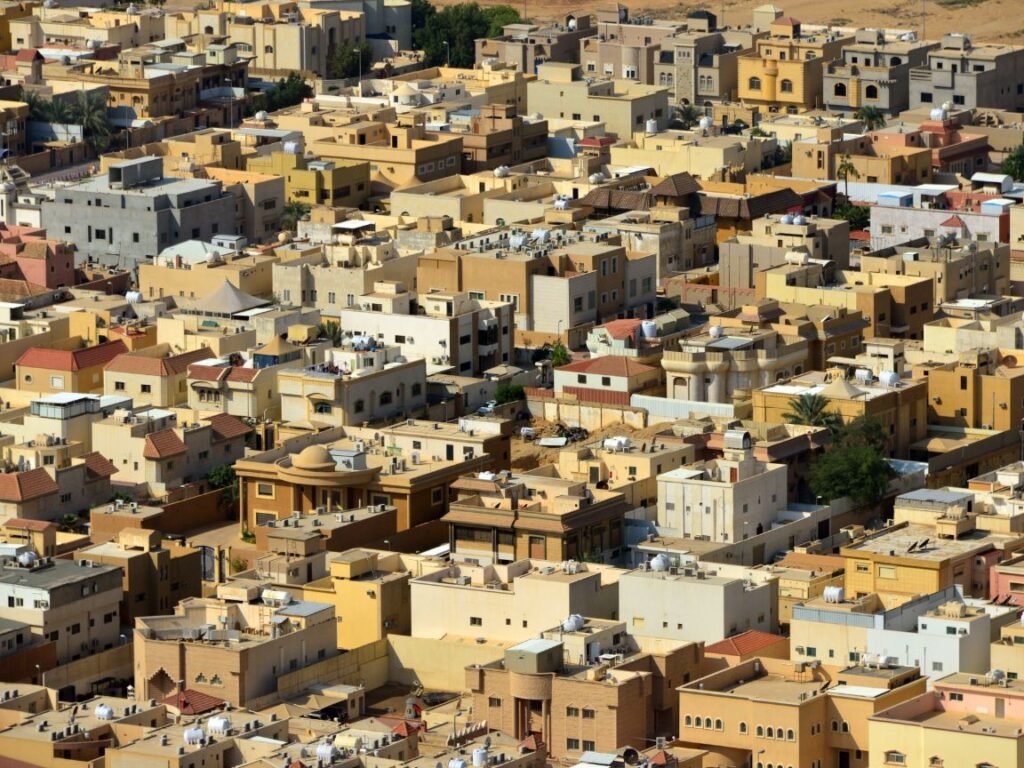
Riyadh is not one rental market. It is three, stacked on top of each other by geography, and your neighborhood choice can swing your monthly housing cost by SAR 4,000–6,000 on a single apartment. Understanding this is more useful than any generic salary figure.
North Riyadh: The Premium Tier
Al Malqa, Hittin, Al Nakheel, and the area around the King Abdullah Financial District (KAFD) are where the majority of Western expats, senior executives, and expat families cluster. One-bedroom apartments here start at around SAR 2,750–4,200 per month, while two-bedroom units in modern buildings run SAR 5,500–8,000. Compounds — gated communities with pools, gyms, and Western amenities — generally add a 15–25% premium on top of those figures.
The tradeoff is real: north Riyadh sits far from downtown traffic, near the best international schools, and offers the newest building stock in the city. Al Malqa in particular has emerged as a value play within the premium north — newer stock than Hittin or Al Nakheel at slightly lower asking rents, and popular with expat families who want modern living without paying the Hittin top of market.
Central Riyadh: The Urban Middle Ground
Al Olaya, Al Sulaymaniyah, and Al Wurud offer urban walkability, proximity to the central business district, and rents running SAR 2,200–3,500 for a one-bedroom and SAR 3,500–5,500 for a two-bedroom. Young professionals and couples without children consistently rank this corridor as their preferred location. The Riyadh Metro’s Blue Line runs through Olaya, which meaningfully cuts into the transport budget for those who live and work along the same corridor.
South and East Riyadh: Value Territory
Al Aziziyah, Al Shifa, and Tuwaiq offer rents from SAR 1,500 for a one-bedroom. These are predominantly Saudi residential areas and suit expats who want to stretch their salary further and who are working in industrial or eastern zones of the city. These neighborhoods are not commonly recommended for first-time expats arriving without local knowledge — infrastructure is simpler, and navigating daily life without Arabic becomes harder in practice.
The Salary-Visa Link Nobody Talks About

How Your Salary in Riyadh Determines Your Iqama Tier and Family Rights
This section is almost never covered in cost-of-living articles — and it is one of the most practically important things an expat needs to know before accepting a Riyadh offer.
As of July 2025, Saudi Arabia’s Ministry of Human Resources and Social Development implemented a mandatory skill-based work permit classification system that links your Iqama tier directly to your salary level. The three tiers operate as follows:
- High-Skilled tier (doctors, engineers, IT specialists, finance professionals): requires a relevant degree, five years of experience, and a minimum salary of SAR 15,000 per month
- Skilled tier (technicians, mid-level specialists): secondary education, two years of experience, and a salary of SAR 7,000–14,999
- Basic tier: minimum salary of SAR 3,000–6,999
Your tier directly affects your Iqama renewal conditions, your ability to transfer between employers, and your right to sponsor dependents. To bring a spouse and children to Riyadh on a family Iqama, you need to meet the dependent sponsorship threshold — broadly accepted at SAR 7,000 per month minimum in practice. Each dependent triggers an additional SAR 400 per month in government levy fees. A family of three dependents adds SAR 1,200 to your fixed monthly outgoings before you pay a single riyal in rent.
What this means in plain terms: a job offer at SAR 6,500 puts you in the Basic tier with reduced protections and transfer rights, and bringing your family to Riyadh becomes legally complicated. The salary calculus is not just about covering groceries and rent — it has direct implications for your residency stability and your family’s legal right to be in the country with you.
What SAR 15,000 in Riyadh Is Actually Worth Compared to Western Cities
Saudi Arabia has zero personal income tax. That changes everything when you do honest comparisons.
A gross salary of SAR 15,000 per month (approximately $4,000 USD) is your full take-home in Riyadh. In London, a gross salary of £5,000 per month ($6,300 USD) becomes roughly £3,300 after income tax and National Insurance — about $4,200 net. In Toronto, CAD 8,500 per month gross becomes approximately CAD 6,100 after federal and provincial tax — around $4,500 USD net.
In pure net purchasing power, SAR 15,000 in Riyadh is broadly equivalent to a £60,000–£65,000 gross annual salary in London or around CAD 100,000 in Toronto. Layer in Riyadh’s lower average rents compared to central London — and the absence of VAT on most personal services — and the real-terms advantage for a mid-career professional is substantial.
The calculus shifts if you have children in international schools and live in a compound. School fees alone, averaging SAR 2,500–5,000 per month, erode the tax advantage quickly. But for single expats and childless couples, SAR 15,000 delivers meaningfully more lifestyle than an equivalent net salary in a major Western city. This is the core financial proposition of working in Riyadh that job offer letters rarely spell out clearly. If you are comparing a Riyadh package against a USD 6,000 salary in Dubai, the same tax-free logic applies across the Gulf — but Riyadh’s lower rents typically give it the edge for aggressive saving.
Food, Transport, and the Everyday Numbers
Groceries and Eating Out
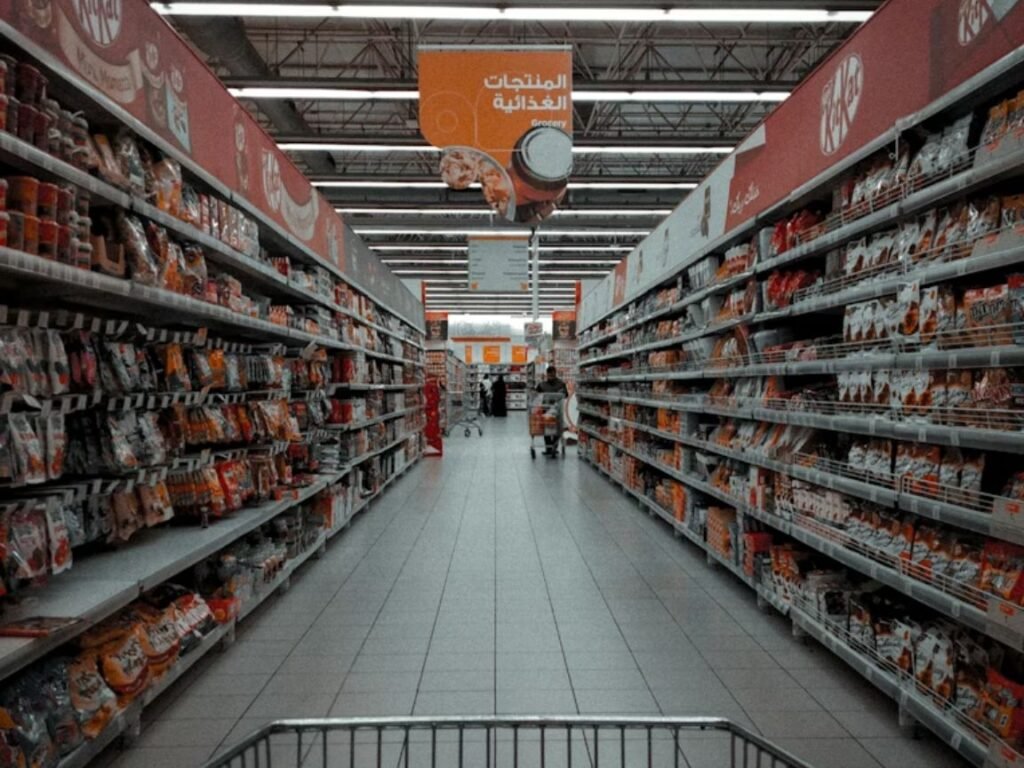
Riyadh’s grocery prices are genuinely reasonable. A full weekly shop for a single person at Danube, Panda, or Carrefour runs SAR 150–250. A mid-range restaurant meal for two costs around SAR 200, while a fast-food combo meal sits at SAR 30. A cappuccino at a café averages SAR 16 — affordable enough that Riyadh’s rapidly developing café culture does not feel like a luxury line item on the monthly budget.
Alcohol is strictly prohibited in Saudi Arabia. Beyond the lifestyle adjustment, this removes one significant spending category compared to Dubai or Doha, where a single evening out can absorb SAR 200–400 in beverages alone.
Transport
Riyadh runs on cars. The metro now serves key corridors at a fraction of vehicle ownership cost, but most expats either buy or lease. Monthly running costs for a mid-size second-hand car — fuel, insurance, maintenance — land around SAR 600–1,000 given Saudi Arabia’s heavily subsidized petrol prices. Ride-hailing via Uber or Careem is widely available, with typical crosstown trips costing SAR 15–40, but daily reliance on it adds up faster than owning a car outright.
How Much Salary Is Enough to Cover Health and Utilities in Riyadh
Employer-provided health insurance is mandatory in Saudi Arabia for all expat workers — your company is legally required to cover you at minimum. The quality and scope of that policy varies significantly by employer. Premium private coverage with dental, optical, and international emergency options costs SAR 300–700 per month for a single person and SAR 1,200–2,500 per month for a family if you are supplementing or sourcing independently. Utilities for a one-bedroom apartment — electricity, water, internet — average SAR 300–500 per month, with the main variable being air conditioning costs during the June–September heat.
What Expats Who Actually Save in Riyadh Do Differently
Expats who genuinely accumulate savings here are not living austerely — they are making a few structural choices that compound over time.
First, they negotiate housing allowance as a separate contract component rather than a bundled salary figure. A SAR 3,000–4,000 monthly housing allowance from your employer changes how much of your base salary you keep unspent, even when the total package number looks identical on paper.
Second, they avoid the compound premium when they do not need it. The compound lifestyle — pool, gym, expat community, 24-hour security — costs SAR 2,000–4,000 per month more than a comparable independent apartment in a standard residential building. For single professionals and younger couples, that premium is difficult to justify financially. Compounds make practical sense for families with young children, where the outdoor space and built-in community matter.
Third, they keep car decisions lean. A second-hand Toyota Camry or Kia Sportage bought outright on arrival for SAR 40,000–60,000 avoids the monthly drain of a new-car lease. The saving versus a new lease vehicle over a three-year posting can reach SAR 3,000–4,000 per month — meaningful even on a mid-range salary in Riyadh.
For more perspective on how salary benchmarks stack up across the Gulf, the framework at What Salary Do You Need to Live in Dubai? is a useful comparison baseline — and shows why the Riyadh-versus-Dubai question is rarely as simple as comparing gross offer letters.
Final Verdict: How Much Salary Is Enough to Live in Riyadh?
How much salary is enough to live in Riyadh comes down to three variables: your life stage, your housing choices, and whether you are bringing dependents.
For a single expat, SAR 8,000–10,000 is the realistic minimum for a comfortable life with savings. Below SAR 7,000 and you are in survival mode unless housing is fully employer-covered.
For a couple without children, the comfortable floor is SAR 13,000–16,000 on a single income — or proportionally less if both partners are earning.
For a family with one or two children in international education, budget a minimum of SAR 25,000–30,000 before accepting any offer. Below that figure, you will likely spend savings rather than build them, and the financial logic of the Riyadh posting disappears. A package of SAR 35,000–50,000 with school fees and housing reimbursed separately is the configuration that genuinely accelerates wealth for families.
The tax-free structure means Riyadh rewards high earners disproportionately. A professional taking home SAR 35,000 per month here keeps every riyal; their equivalent in Sydney or Frankfurt gives 30–40% back to the government before buying a single thing. Riyadh is also becoming a more liveable city at real pace — entertainment, dining, and infrastructure have all improved sharply under Vision 2030 investment.
The salary question is not whether you can survive in Riyadh. Most expats on SAR 8,000 survive fine. The question is whether you leave richer than you arrived. Structure your package well, understand the visa implications of your salary tier, and negotiate housing as a separate line — and the answer should be yes.
For a broader look at Gulf income benchmarks, How Much Money Do You Need to Live? and Can I Live in Dubai With a 4,000 Salary? provide useful cross-city context on where Riyadh fits in the Gulf cost hierarchy.
Frequently Asked Questions
Is SAR 10,000 a good salary in Riyadh? Yes, for a single expat. SAR 10,000 covers a one-bedroom apartment in a mid-range neighborhood, groceries, transport, and reasonable dining, with SAR 2,000–3,000 left for savings or remittances each month. For a couple or family, SAR 10,000 is tight and would require a housing allowance or a working partner to make it work comfortably.
What is the minimum salary to bring family to Riyadh? The family Iqama sponsorship threshold operates at around SAR 7,000 per month for basic eligibility, with each dependent costing an additional SAR 400 per month in government levies. To actually afford a family life in Riyadh — a two-bedroom apartment, international school fees, and household costs — the realistic minimum is SAR 18,000–22,000 per month on a single income.
How much does rent cost in Riyadh in 2026? A one-bedroom apartment averages SAR 2,750 per month citywide. Budget options in south Riyadh start from SAR 1,500, while premium north Riyadh apartments in Al Malqa or Hittin reach SAR 4,200 and above. Two-bedroom units in expat-preferred areas start around SAR 5,500 and run to SAR 8,000 or more for modern compounds. A five-year rent freeze on existing contracts introduced in late 2025 has stabilized rents for current tenants, though new leases in prime areas still command meaningful premiums.
Is Riyadh cheaper than Dubai for expats? Generally yes. Riyadh’s overall cost of living index sits around 47, and rents are on average lower than comparable Dubai neighborhoods. However, Riyadh’s compound culture and international school costs narrow that gap significantly for families. Single professionals typically find Riyadh noticeably more affordable than Dubai on an equivalent gross salary. See Is 3,000 AED a Good Salary in Dubai? for a side-by-side reference point.
Do expats pay income tax in Saudi Arabia? No. Saudi Arabia has no personal income tax for expatriate workers. The SAR figure on your contract is what you take home in full. This is the single biggest financial advantage of a Riyadh posting compared to equivalent roles in Europe, North America, or Australia.
What salary puts you in the High-Skilled work permit tier in Saudi Arabia? The 2026 skill-based Iqama classification requires a minimum of SAR 15,000 per month to qualify for the High-Skilled tier, alongside a relevant degree and five years of experience. This tier carries stronger labor mobility rights and smoother renewal conditions than the Skilled or Basic tiers.
How much should I budget for a car in Riyadh? Riyadh is car-dependent for most expats outside the metro corridors. Monthly ownership costs including fuel, insurance, and maintenance run SAR 600–1,000 per month for a modest second-hand vehicle. Leasing a new car privately adds SAR 1,500–3,000 per month. Budget for this expense from day one — it is nearly unavoidable unless you live and work directly along a metro line.